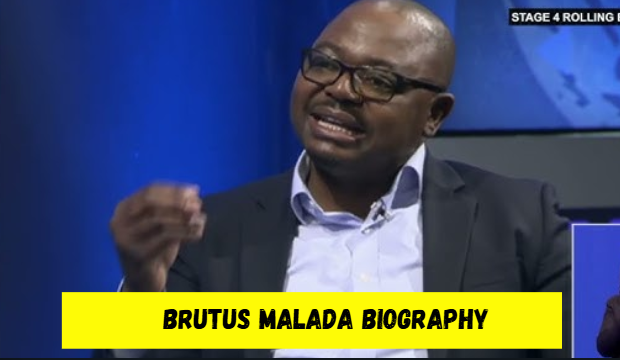
Brutus Malada is widely known as a sharp public commentator, policy analyst, researcher, and writer whose voice carries weight in academic, political, and governance circles. With over a decade and a half of experience across local and international institutions, he has built a reputation as a thinker who combines intellect with practical insight.
Beyond the titles and public appearances, Brutus Malada is also a family man, mentor, and advocate for education—someone whose influence quietly but steadily shapes conversations in South Africa and beyond.
Brutus Malada Biography
| Detail | Information |
|---|---|
| Full Name | Brutus Malada |
| Age | 47 years |
| Nationality | South African |
| Profession | Analyst, researcher, writer |
| Wife | Mpho Phalatse |
| Net Worth | Approx. $500,000 |
| Education | University of Venda |
| Religion | Christianity |
| Tribe | South African (not publicly emphasized) |
| Known For | Policy analysis & education advocacy |
Who Is Brutus Malada?
Brutus Malada is a South African public intellectual recognized for his work in research, higher education policy, governance, and international development. Over the years, he has worked with some of the most respected institutions globally, including UNESCO and the European Union, while also contributing to national discourse through writing and public commentary.
Think of him as a bridge—connecting policy to people, ideas to action, and education to opportunity.
Early Life and Background
Brutus Malada was born and raised in South Africa, where his early experiences shaped his passion for education, leadership, and social development. From a young age, he demonstrated strong analytical skills and a curiosity about how systems work—particularly in governance and education.
These early interests later became the foundation of his professional life, guiding his academic choices and career direction.
Brutus Malada’s Age
Brutus Malada is 47 years old. At this stage of life, he represents a balance between experience and energy—seasoned enough to have worked at the highest levels of policy and young enough to remain actively engaged in shaping future reforms.
Educational Journey and Academic Foundation
Education has always been central to Brutus Malada’s identity. He is an alumnus of the University of Venda, an institution he continues to support and represent with pride.
His academic training opened doors to research institutions, policy environments, and leadership roles where intellectual rigor and strategic thinking were essential. Over time, his academic grounding evolved into real-world impact.
International Career and Global Exposure
One of the most defining chapters of Brutus Malada’s career was his work with international institutions.
He was awarded a prestigious research fellowship by UNESCO, serving the full duration at UNESCO’s headquarters in Paris. During this period, he worked within the Director-General’s Office, under the guidance of the Head of Internal Oversight Services. This role exposed him to global governance systems, accountability frameworks, and international policy standards.
His experience didn’t stop there.
Brutus also worked with the European Union Delegation to South Africa, where he served as a Project Manager for the Education Portfolio. In this role, he provided both technical and financial support to South Africa’s higher education sector.
Role in Scholarship and Education Development
While working with the European Union, Brutus Malada managed the Erasmus Mundus Scholarship Programme—an initiative that enabled hundreds of South African students to study abroad.
Through this program, students from various universities, including the University of Venda, gained access to international education opportunities. For many, this was life-changing, and Brutus played a key role behind the scenes in making it happen.
Research and Institutional Experience
Brutus Malada’s credibility is strongly rooted in research and academic work. He has contributed to and worked with highly respected institutions such as:
-
National Research Foundation (NRF)
-
Human Sciences Research Council (HSRC)
-
Centre for Education Policy Development
-
University of the Western Cape (UWC)
At UWC, he served as an advisor and speechwriter to the Vice-Chancellor, Professor Tyrone Pretorius, during the height of the #FeesMustFall movement—a critical and challenging period in South African higher education.
He also previously worked as a speechwriter to Yunus Carrim, who was then the Deputy Minister of Cooperative Governance and Traditional Affairs.
These roles placed Brutus at the heart of policy dialogue during moments of national tension and transformation.
Writing, Commentary, and Public Voice
Brutus Malada is also known for his writing and commentary. He has contributed to academic journals, books, and national newspapers, often appearing as a guest columnist.
His writing style is thoughtful and accessible, aimed at sparking conversation rather than shutting it down. Whether discussing education reform, governance, or social justice, he writes with clarity and depth.
University of Venda Ambassadorial Role
As a proud alumnus of the University of Venda, Brutus Malada maintains a strong relationship with his alma mater. He was recently appointed as the President of the Convocation, a role that reflects both trust and respect from the institution.
In this capacity, he leverages his extensive network of academic institutions, funding bodies, and public platforms to support the university’s growth, visibility, and long-term development.
His leadership is seen as a valuable asset to the institution’s future.
Brutus Malada’s Wife
Brutus Malada is married to Mpho Phalatse. While he keeps much of his personal life private, their marriage is known to be built on mutual respect and shared values.
He has consistently balanced public life with family responsibility, choosing dignity and privacy over unnecessary exposure.
Children and Family Life
Details about Brutus Malada’s children are kept away from the public spotlight. This reflects a conscious decision to protect family life from public scrutiny.
Those close to him often describe him as a grounded individual who values family, stability, and personal integrity.
Tribe and Cultural Background
Brutus Malada belongs to a South African ethnic group, though he has not publicly emphasized tribal identity as a defining feature of his work. Instead, he often positions himself as a pan-African thinker focused on national development, education, and governance.
His cultural roots, however, clearly influence his respect for tradition, leadership, and community values.
Religion and Belief System
Brutus Malada is believed to be a Christian, a belief system that subtly informs his values around service, ethics, and responsibility. While he does not frequently speak publicly about religion, his approach to leadership reflects moral discipline and social accountability.
Brutus Malada’s Net Worth
Brutus Malada’s estimated net worth is around $500,000. His income is largely derived from:
-
Research and consultancy work
-
Academic and policy advisory roles
-
Writing and speaking engagements
-
International institutional experience
Rather than flashy displays of wealth, his success is measured more in influence, credibility, and long-term impact.
Reputation and Public Perception
Among peers and observers, Brutus Malada is regarded as intelligent, composed, and principled. He is respected for speaking truth with restraint and for engaging complex issues without sensationalism.
In a noisy public space, his calm and reasoned voice stands out.
Conclusion
Brutus Malada’s life is a testament to the power of education, discipline, and thoughtful leadership. He has shown that influence does not always need loudness—sometimes it simply needs consistency, credibility, and conviction.
As he continues to shape academic and public conversations, his work remains a reminder that real change often begins quietly, with ideas backed by action.
Leave a Reply